 Artwork A
The Arnolfini Portrait
Jan van Eyck · 1434 · Northern Renaissance
Launch relationship 02 · Movement comparison · reviewed 2026-08-06
Test how a Northern domestic interior and an Italian sacred landscape build meaning through different relationships among objects, bodies and space.
Artwork AJan van Eyck · 1434 · Northern Renaissance
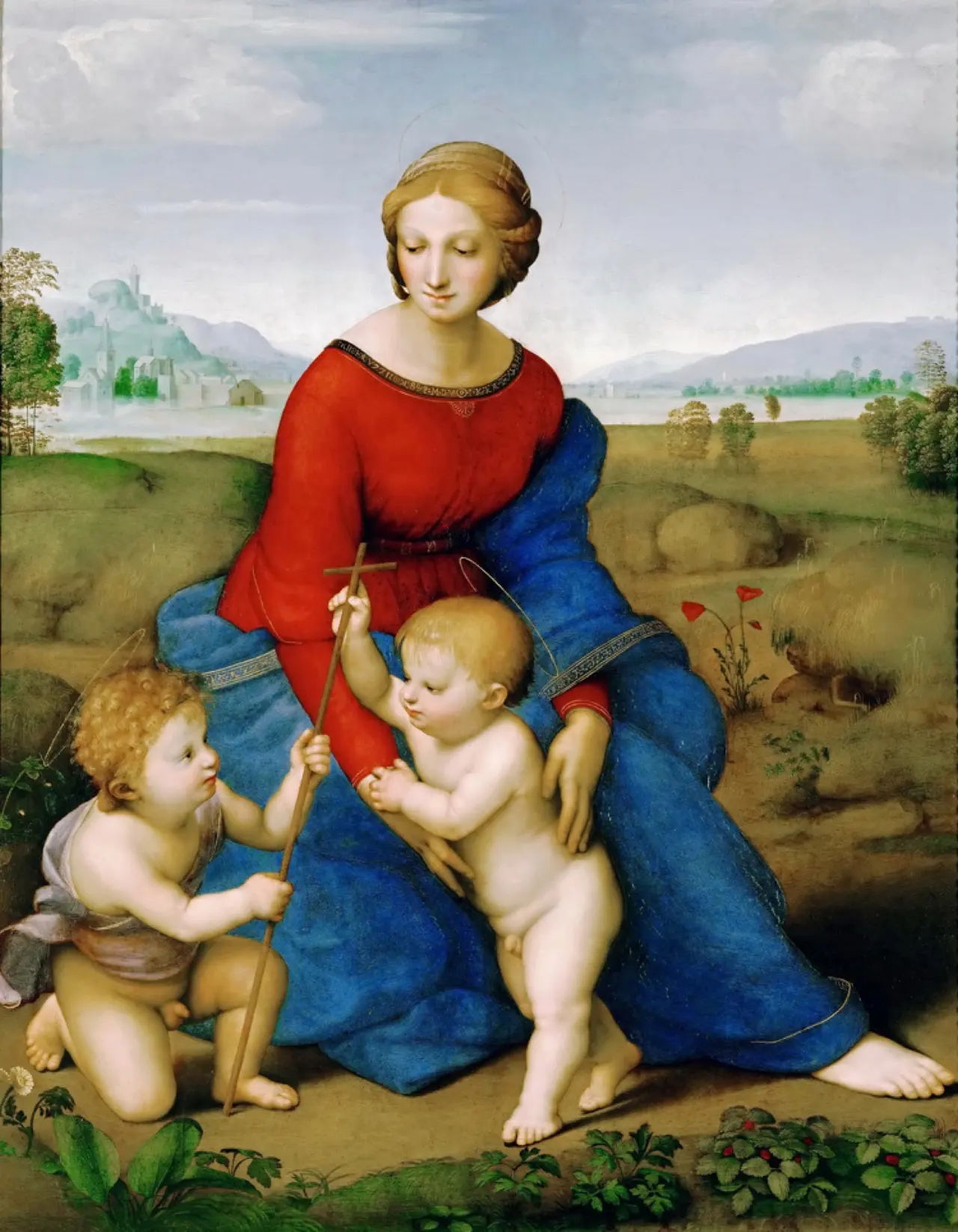 Artwork B
Raphael · 1505-1506 · High Renaissance
Shared research question
The comparison does not reduce two regions to fixed styles. It tests two influential solutions: Van Eyck's oil-based precision makes a merchant interior dense with inspectable objects, while Raphael organizes sacred figures through balanced bodies, circulating gazes and an open landscape shaped by Central Italian Renaissance ideals.
Paired visual evidence
01
What makes the center meaningful?
AThe convex mirror expands the room
A tiny reflected room, four figures and circular scenes around the mirror frame are visibly present.
BThree bodies form a calm pyramid
The three figures occupy a triangular group at center.
The mirror expands the room and introduces additional figures beyond the couple.
Three bodies form a stable pyramid within the landscape.
Northern authority accumulates through optical and material clues; Italian authority is concentrated in bodily geometry.
02
Does gesture settle meaning or keep it open?
AJoined hands establish a relationship, not a verdict
Their hands meet at the center of the composition, directly below the mirror and signature.
BGazes circulate within the group
All three heads turn inward rather than toward the viewer.
Joined hands establish a formal relationship without proving one event.
Circulating gazes bind Mary, Christ and John into a legible sacred exchange.
One gesture generates interpretive uncertainty; the other helps stabilize a devotional narrative.
03
How does setting support the figures?
AOranges connect the interior to trade and expense
Several orange fruits punctuate the darker window side of the room with warm color.
BThe open landscape preserves air around intimacy
A luminous distant landscape fills both sides.
Imported fruit connects the room to trade and expense.
Open landscape preserves air around the idealized group.
Material economy thickens the Northern interior while measured nature expands the Italian sacred scene.
Editable argument
Van Eyck builds meaning cumulatively through material objects whose functions remain partly debated, whereas Raphael concentrates meaning in an idealized bodily group whose geometry and gazes make doctrine visually coherent.
Both works are highly constructed, but one hides order inside abundance while the other makes order immediately visible.
The contrast is not realism versus idealism; both transform observation to serve different social and devotional tasks.
Next research move
Choose a painting, a research task or the complete directory.