 A
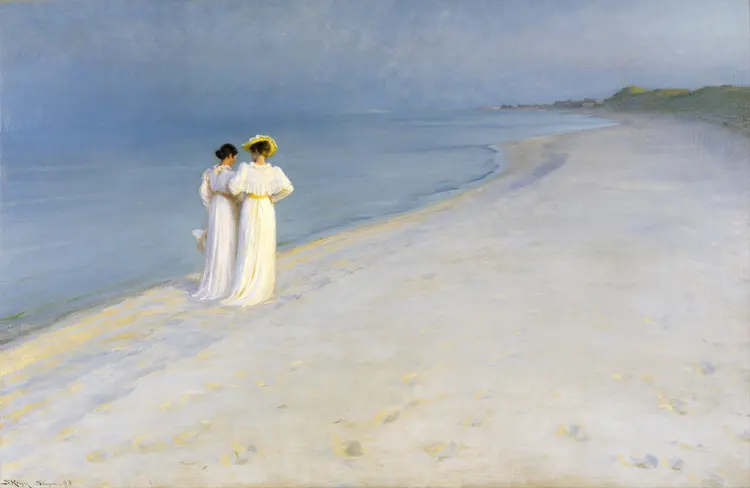
ASummer Evening on Skagen's Beach
P. S. Krøyer · 1893
Two women walk along the beach as the long blue twilight of northern Europe joins figures, sea and sky.
Free artwork comparison tool
Compare two paintings side by side, separate object facts from interpretation, and turn visible differences into an evidence-led thesis.
Artwork A
Artwork B
AP. S. Krøyer · 1893
Two women walk along the beach as the long blue twilight of northern Europe joins figures, sea and sky.
 B
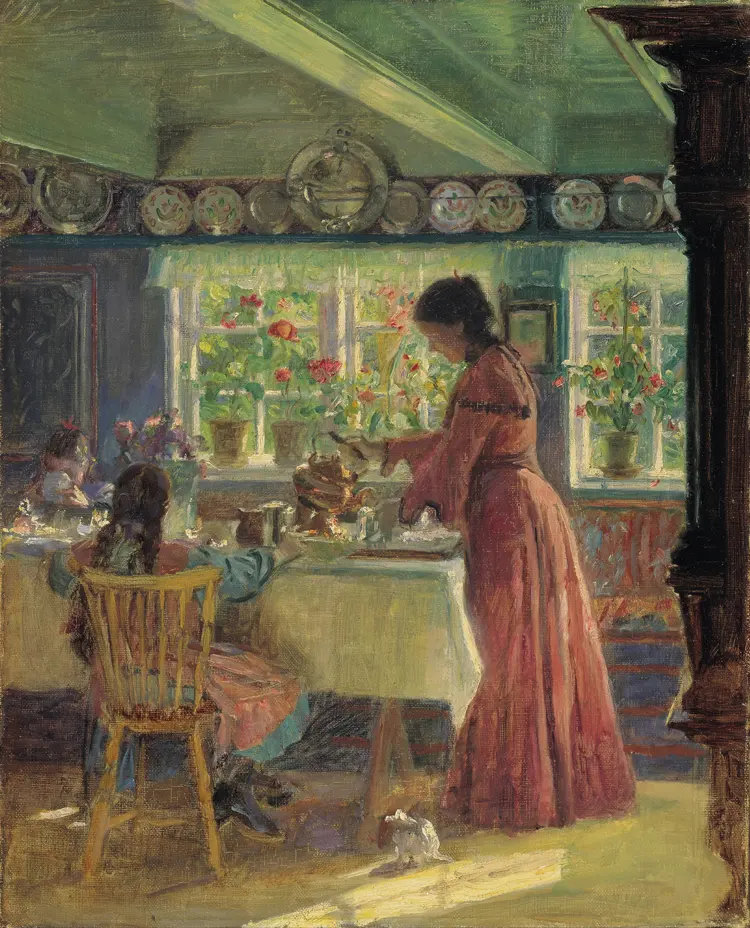
BLaurits Tuxen · 1906
Morning light crosses the room, giving an ordinary domestic gesture a quiet and lasting weight.
Object record comparison
Evidence set A
Evidence set B
Comparison argument builder
Research question
What do the differences between Skagen Painters and Skagen Painters reveal about artistic priorities in these works?
Evidence-led thesis frame
Seen in relation to their dates, materials and movements, Summer Evening on Skagen's Beach prioritizes ______, while Pouring the Morning Coffee reflects ______.
Saved research draft
Saved automatically for this pair and focus.
Comparative art analysis
A useful art comparison does not place two isolated descriptions beside one another. It gives both artworks the same question, tests that question against visible evidence and explains what the relationship reveals about form, meaning or historical purpose.
Step 01
Choose composition, color, meaning or context so both artworks answer the same visual research problem.
Step 02
Match a detail in one work with a related or contrasting detail in the other instead of describing each image separately.
Step 03
Turn the observed relationship into a thesis about attention, emotion, meaning, technique, function or historical context.
Common applications
Comparative essays · Formal analysis · Art history exams · Museum and classroom discussion
Authority pathways
A visual difference becomes useful when it connects to a method, a period or a documented interpretive problem. Continue from the selected pair into the strongest supporting guides.
Name the structures that make two paintings organize attention differently.
Test whether similar objects or gestures carry the same meaning in different contexts.
Place differences in space, material and symbolism inside a historical framework.
Compare observed, supported and debated interpretations across famous works.
Comparative method
Confirm title, artist, date, medium, dimensions and location before interpreting either image.
Focus on composition, color, subject or context so the comparison can develop beyond a list of similarities.
For every claim about one painting, identify a corresponding detail that can be tested in the other.
A thesis should state what the visual difference changes: attention, emotion, meaning, social function or historical argument.
Questions
Begin with verifiable object facts, then compare one visual problem at a time: composition, color and light, subject and meaning, or historical context and technique. Support every claim with a visible detail from each work.
State a focused question, pair evidence from both artworks and explain why the similarity or difference matters. Organize the comparison by visual problems rather than writing two separate artwork summaries.
Formal comparison examines visible relationships such as composition, scale, color, line, space, material and technique. Historical context can then explain why those formal choices differ.
A strong comparison identifies both artworks, establishes a focused research question, analyzes evidence from each image and ends with a thesis that explains why a similarity or difference matters.
Yes. Cross-period comparisons can be especially useful when the same subject, format or visual strategy produces different effects. Keep the comparison focused instead of treating one movement as a simple improvement over another.
Yes. A side-by-side view makes scale, composition, palette, subject and object facts easier to test against one another while keeping both images visible.
The selected pair can be shared through a stable comparison link. The comparison record, visual evidence and thesis prompt can also be printed or copied as a research brief.
Tool pathway
A useful output should lead back to an artwork, method or source record.